
Daily Office Reflections for Tuesday, November 3, 2026
Psalm 78; Joel 1:15–2:11; Revelation 19:1–10; Luke 14:25–35
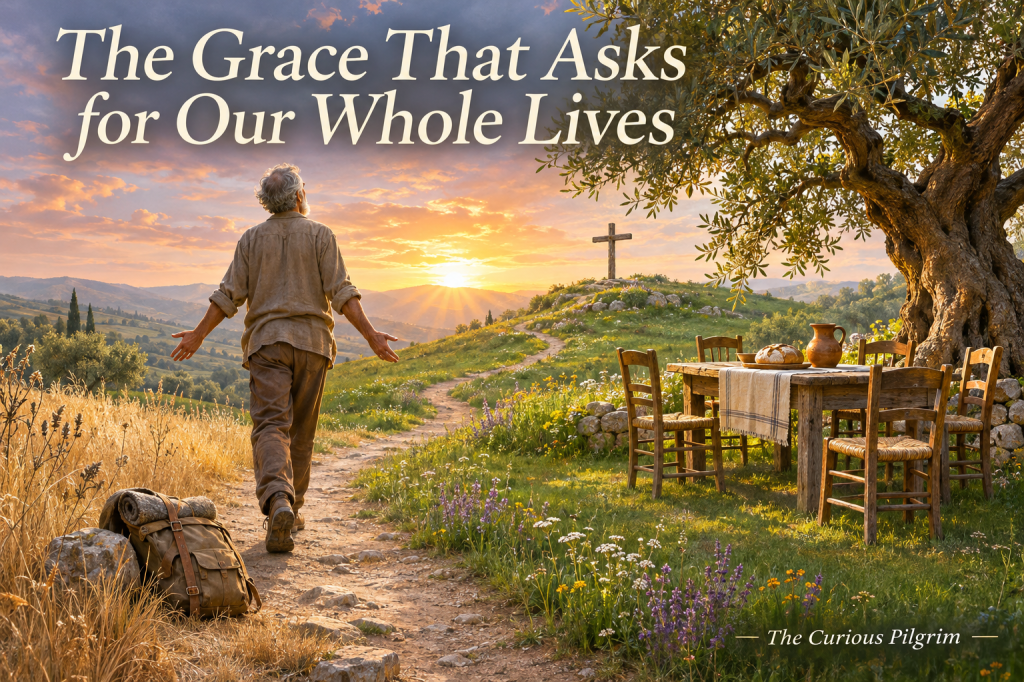
I am grateful for the grace that meets us when we fall. I have needed that grace more times than I can count. But today’s readings remind me that grace also calls us to get up, pay attention, and learn a different way of walking.
There is a movement through these passages: remembering, awakening, rejoicing, and following. Each brings us closer to a question that becomes difficult to avoid:
What will I do with the grace I have received?
Psalm 78 tells the story of a people who repeatedly experienced God’s provision and repeatedly struggled to trust. God delivered them, fed them, and guided them. Yet fear returned. Gratitude faded. Their promises sometimes lasted only until the next difficulty.
I recognize that pattern.
I can remember how God carried me through one season and still wonder whether I will be sustained through the next. I can speak about trust while quietly trying to control every outcome. Sometimes a present uncertainty fills my vision until I can hardly see the mercy that has accompanied me for years.
This psalm invites us to remember honestly. We need to remember both God’s faithfulness and what happened when we allowed fear, pride, or resentment to direct our steps.
That is also the story we can offer those who follow us. Our children, grandchildren, and others who hear our stories need something more useful than an account in which we always made the right choice. They need to hear how we failed, what we learned, and how mercy made another beginning possible.
An honest life can become a testimony to persistent grace.
Joel brings urgency to that j un remembering. The fields are devastated. The animals suffer. The land itself seems to cry out. The prophet sounds an alarm because the crisis can no longer be ignored.
Some passages of Scripture ask us to sit quietly. This one asks us to wake up.j
There are times when we need that summons. We grow accustomed to patterns that wound us and others. We postpone a necessary change. We tell ourselves that we will address the problem when life becomes less complicated.
Then something exposes how fragile our arrangements have become.
We should be careful about using Joel to label someone else’s suffering as God’s punishment. His words give us reason to examine our own lives and to join the cry of a suffering world. They call us to take seriously what is broken.
Where have I become careless? Whose suffering have I learned to overlook? What needs to change in the way I live?
Even before an answer comes, we can cry out to God. Lament is a faithful place to begin.
Then Revelation opens a window onto a multitude singing.
Babylon, with its violence, arrogance, and exploitation, is being judged. Those whose lives have been crushed are heard. The power that seemed untouchable does not endure forever.
That is a word of hope for people who have waited a long time for justice.
The vision then moves toward the marriage supper of the Lamb. Beyond the collapse of oppressive power stands the promise of communion: a feast, a welcome, a people brought together in the presence of God.
This is the hope I hear running through Revelation. Creation’s future belongs to God. The suffering we see is real, but so is the promise of renewal.
One detail stays with me: the bride is given fine linen to wear, and that linen represents the righteous deeds of the saints.
The clothing is a gift, yet it bears the evidence of a life being transformed.
Grace takes visible shape. It becomes bread shared, forgiveness offered, truth spoken, and a stranger welcomed. It becomes the patient work of learning to love.
Then Jesus turns toward the crowd in Luke and asks whether they understand what following him will require.
His words are difficult. Family, possessions, and even life itself cannot claim our highest allegiance. He speaks of carrying a cross and counting the cost.
I cannot read those words comfortably.
I want to follow Jesus, but I also want security, approval, familiar routines, and some assurance that obedience will not disrupt my plans. Jesus asks me to consider what happens when those desires conflict with the love he teaches.
Will I speak truth when silence would preserve my comfort? Will I share when generosity changes what I can keep? Will I love someone whose welcome may cost me the approval of others?
Following Jesus reaches into those choices.
His words about possessions deserve particular attention. It is easy to say that I hold things loosely while keeping everything firmly in my hands. Jesus presses me toward a practical question: What becomes available to others because I follow him?
My time? My table? My resources? My willingness to listen?
The image of salt brings the question close to daily life. Does my faith make a difference in how I live with other people? Can its presence be recognized in my speech, my choices, and my response to suffering?
Here I return to the promise in our baptismal covenant:
“I will, with God’s help.”
Those words move me because they hold commitment and dependence together. I am making a promise. I am also acknowledging that I need grace to live it.
I will remember, with God’s help.
I will face what needs to change, with God’s help.
I will hold to hope and practice generosity, with God’s help.
I will rise when I stumble and return to the path, with God’s help.
The grace that has carried us this far continues its work. It opens our hearts, loosens our grip, and teaches us to love with greater courage.
Today, I want to receive that grace with an open heart and open hands—and take the next faithful step.
Merciful God, help us remember the love that has sustained us. Awaken us to what needs to change, and give us compassion for all who suffer. Let the hope of your promised feast shape the welcome we offer today. Teach us to release what we cling to and follow Jesus with courage. When we stumble, help us return and begin again. We will, with your help. Amen.
—The Curious Pilgrim


Leave a Reply