
Some mornings, the Sacred Writings bring me back to places I would rather not revisit.
As the United States reeled from the September 11 attacks, I lay in a hospital room listening to doctors tell me I had a fifty-fifty chance of surviving. Years before, Erma and I had heard the devastating news that our baby, Amanda Joy, had died in the womb.
I know something about walking through the valley of the shadow of death. I also know that believing the Lord is our Shepherd does not make that valley easy to walk.
Today’s Daily Office readings lead me to consider how character develops along such a road. What does it mean to become a person whose life reflects God’s mercy, truth, and love?
Psalm 9 gives thanks to God, the righteous judge who remembers the afflicted and offers refuge to the oppressed. That thanksgiving reaches beyond our own deliverance. It invites us to notice those who are still hurting.
I cannot explain every sorrow. I do not believe God caused our daughter’s death. But I believe God can meet us in our sorrow and help us become more compassionate toward others who carry wounds we cannot see.
Psalm 15 brings character into ordinary life: speaking truth from the heart, refusing to slander a neighbor, keeping our word even when it costs us something. Faith takes shape in how we treat people.
Then Psalm 25 gives us the prayer we need for that work: teach me your paths. We do not arrive knowing everything. We ask, listen, learn, and sometimes discover that we need to change direction.
Sirach adds a necessary word about honesty. Acknowledge wrongdoing. Do not let pride keep us from speaking truth or turning toward God. God’s mercy is generous, but we can respond to it today instead of continually postponing the next faithful step.
I think of the people whose stories fill the Scriptures. Jonah resisted the very mercy God wanted him to proclaim. David loved God and still caused terrible harm. Abraham tried to help God’s promise along. Jacob deceived others before becoming Israel. The disciples argued about greatness, misunderstood Jesus, and failed him.
Yet God continued calling, correcting, forgiving, and inviting them forward.
In Luke 9, Jesus sets his face toward Jerusalem. When a Samaritan village refuses to welcome him, James and John want to call down fire. Jesus rebukes them.
There is a lesson in character right there. Following Jesus means learning how to respond when we are disappointed or rejected. The disciples needed to learn mercy, and so do I.
Jesus also speaks plainly about the commitment involved in following him. The road ahead requires more than good intentions. It asks something of us.
Revelation 7 offers a different picture: God’s servants are marked as belonging to God before the coming judgments. I hear reassurance in that image. Amid uncertainty, God knows his people. Their lives matter to him.
These readings help me understand sanctification—the continuing work of God’s grace in our lives.
Scripture gives us a witness to God’s faithfulness. Tradition brings the wisdom and prayers of those who have walked before us. Reason helps us examine what we believe and discern what is true and loving. Experience brings all of this into the hospital room, the grieving home, the difficult conversation, and the quiet morning when we wonder what comes next.
Experience helps me hear Scripture more deeply. Scripture helps me understand my experience. And grace keeps inviting me to respond.
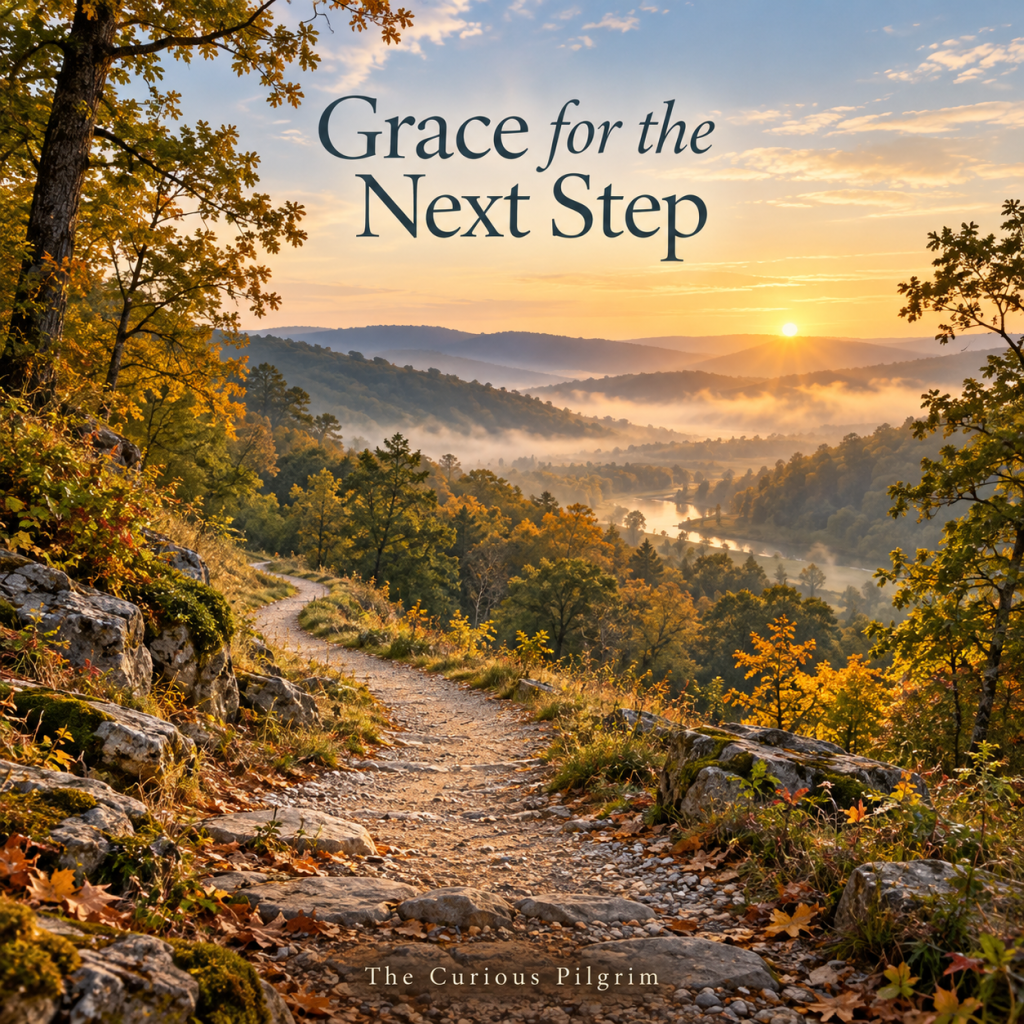
The road is not always straight. There are detours, wrong turns, and places where we must wait. Sometimes we need forgiveness. Sometimes we need rest or another person’s helping hand. The Holy Spirit guides us as we discern where to place our feet next.
I think of Peter’s reminder that the Lord is not slack concerning his promise. God is patient. Peter himself knew what it meant to fail and be welcomed back.
That is my hope: God does not give up on us.
I find myself holding together Job’s words of trust and his declaration that his Redeemer lives. Those words rise from anguish. Questions and faith can inhabit the same wounded heart.
I still do not understand everything that has happened in my life. Some pain remains. But I believe my Redeemer lives, and God’s mercy is still at work in me.
I am still the Curious Pilgrim—still learning, still receiving grace, still being changed.
I cannot see the whole road ahead. Today, I can ask for grace to take the next faithful step.
Lord Jesus Christ, have mercy on me. Teach me to see with compassion, listen with wisdom, speak with love, and discern what is true and loving. Shape my character through your patient grace. When the road is difficult to see, guide my next step. Amen.
Daily Office readings: Psalm 9, 15, and 25; Sirach 4:20–5:7; Revelation 7:1–8; Luke 9:51–62.


Leave a Reply