
Daily Office Reflection for Sunday, October 11, 2026
Psalms 114, 115, 148, 149, 150; Sirach 4:1–10; 1 Corinthians 10:1–13; Matthew 16:13–20
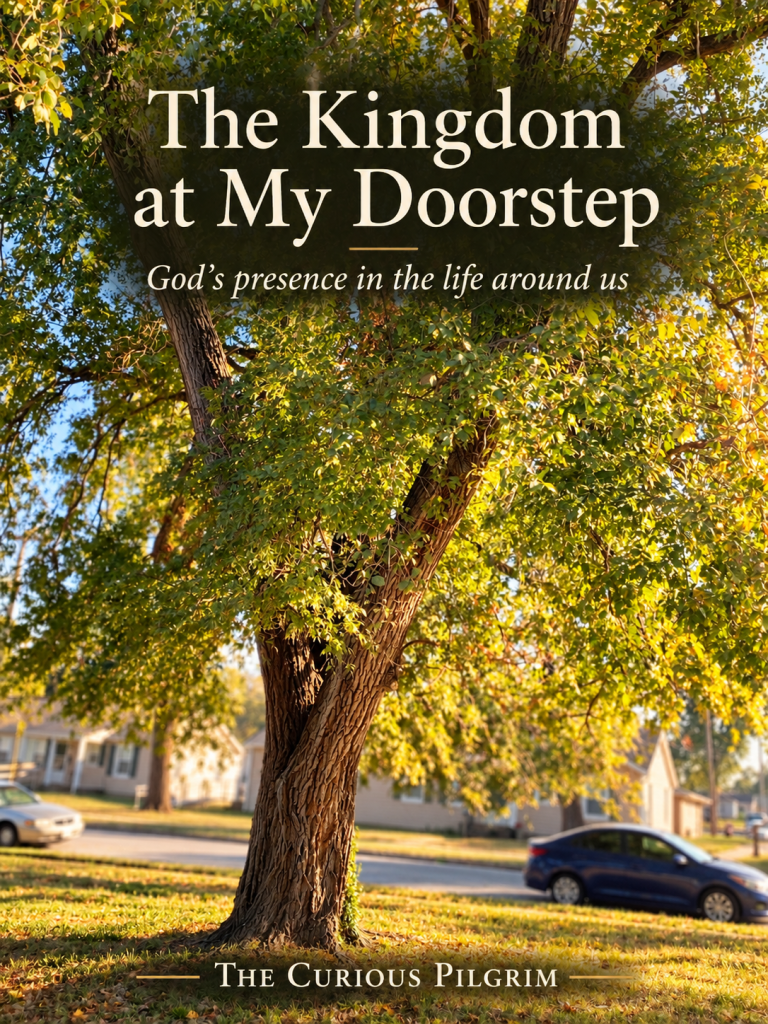
Today I walked outside and admired the beautiful elm tree in front of my apartment.
It is fall, and soon its leaves will come drifting down. I enjoy the shade it gives. I have watched squirrels run up and down its trunk and listened to birds singing from its limbs. It contributes oxygen to the air I breathe. So much life gathers around this one tree.
As I stood there, I thought: this is God’s kingdom. This tree, these creatures, this earth, and the life we share belong to the Creator.
Reading Jim Forest’s The Road to Emmaus has helped me pay closer attention to walking. Slowing down gives me time to notice, to receive, and to give thanks. Sometimes an ordinary walk brings me into a deeper awareness of the sacred world at my doorstep.
Sunday’s psalms invite me into that awareness. In Psalm 114, the sea, river, mountains, and hills respond to God’s presence. Psalm 148 gathers the heavens and earth into a great chorus of praise. Psalm 150 invites everything that breathes to join in.
I think of the birds in my elm tree. They sing, and I listen. Then I offer my own thanksgiving.
God is Creator, Redeemer, and Sustainer. God deserves our praise now.
When I speak of God’s kingdom here, I am speaking of the Creator’s reign in the world God has made and the kingdom dwelling in the hearts and lives of those who follow Jesus. I am not describing the final vision of Revelation. I believe God’s kingdom is already present. Its fullness remains unrealized, but we can live its reality today.
That belief carries responsibility.
Sirach tells us what such a life looks like: care for the hungry, listen kindly to those in distress, defend the oppressed, and protect the vulnerable. Jesus gives that care a human face in Matthew 25. We encounter him in the hungry person, the stranger, the sick person, and the prisoner.
If God’s kingdom lives within me, it should become visible in how I treat them.
I thank God for people such as Jimmy Carter, Dolly Parton, Dorothy Day, and so many others whose generosity and service have shown us ways to care. Their examples invite me to examine my own life. What am I doing with the love I have received?
That question reaches beyond our human neighbors. The earth sustains us. Water, soil, trees, and countless living creatures make our lives possible. I want to listen more carefully to Indigenous peoples, whose diverse traditions and relationships with these lands long predate the United States. We have much to learn about gratitude, responsibility, and caring for the places that sustain life.
The elm outside my apartment reminds me that I am part of creation. I receive its gifts every day.
Paul’s words in First Corinthians bring humility into this reflection. We can receive God’s gifts and still become careless. We can believe we are standing firmly and fail to notice how far our conduct has wandered from our confession.
His warning about complaining makes me examine the difference between bringing my pain honestly to God and allowing resentment to harden my heart. I can admit that I am tired, frightened, or confused. I can protest injustice. And I can remain open to being guided and changed.
Paul’s warning is accompanied by reassurance: God is faithful. In testing and temptation, God provides a way for us to endure. Sometimes that means accepting help, stepping away from something harmful, or admitting that we need to begin again.
Humility and responsibility belong together.
Psalm 149 places praise alongside the image of a sword. As a follower of Jesus, I bring that difficult image into conversation with the sword of the Spirit in Ephesians: God’s word. I need that word to expose my own dishonesty, pride, and prejudice, and to give me courage to speak truth with love.
Then Matthew brings me to Jesus’ question: who do you say that I am?
Peter confesses that Jesus is the Messiah, the Son of the living God. Yet as the Gospel continues, Peter discovers that recognizing Jesus does not mean he fully understands Jesus’ way. He still has learning to do.
So do I.
It is one thing to confess Jesus. It is another to follow him when love requires patience, when justice requires courage, and when welcoming someone stretches my understanding.
Discipleship has a cost. Following Jesus may cost us comfort, approval, security, or even our lives. My hope rests in the eternal life we have in God.
As I grow older, this is the prayer I want to carry: may the Jesus I profess be the Jesus I follow.
May the kingdom within me become visible in the welcome I offer, the care I give, and the responsibility I accept.
Today that prayer began beside an elm tree.
Where might you notice God’s presence today? And how might your gratitude become care for someone—or something—entrusted to you?
Lord Jesus Christ, have mercy on me. Teach me to see your gifts in creation and your image in my neighbors. Keep me humble and willing to be changed. Teach me to discern what is true and loving, to listen with wisdom, and to speak with love. May the Jesus I profess be the Jesus I follow. Amen.
The Curious Pilgrim


Leave a Reply