
Daily Office Reflection for Tuesday, September 22, 2026
Readings: Psalms 94, 95, 97, 99, and 100; Hosea 4:1–10; Acts 21:1–14; Luke 5:12–26
“He made us, and we are his. We are his people, the sheep of his pasture.”
—Psalm 100:3
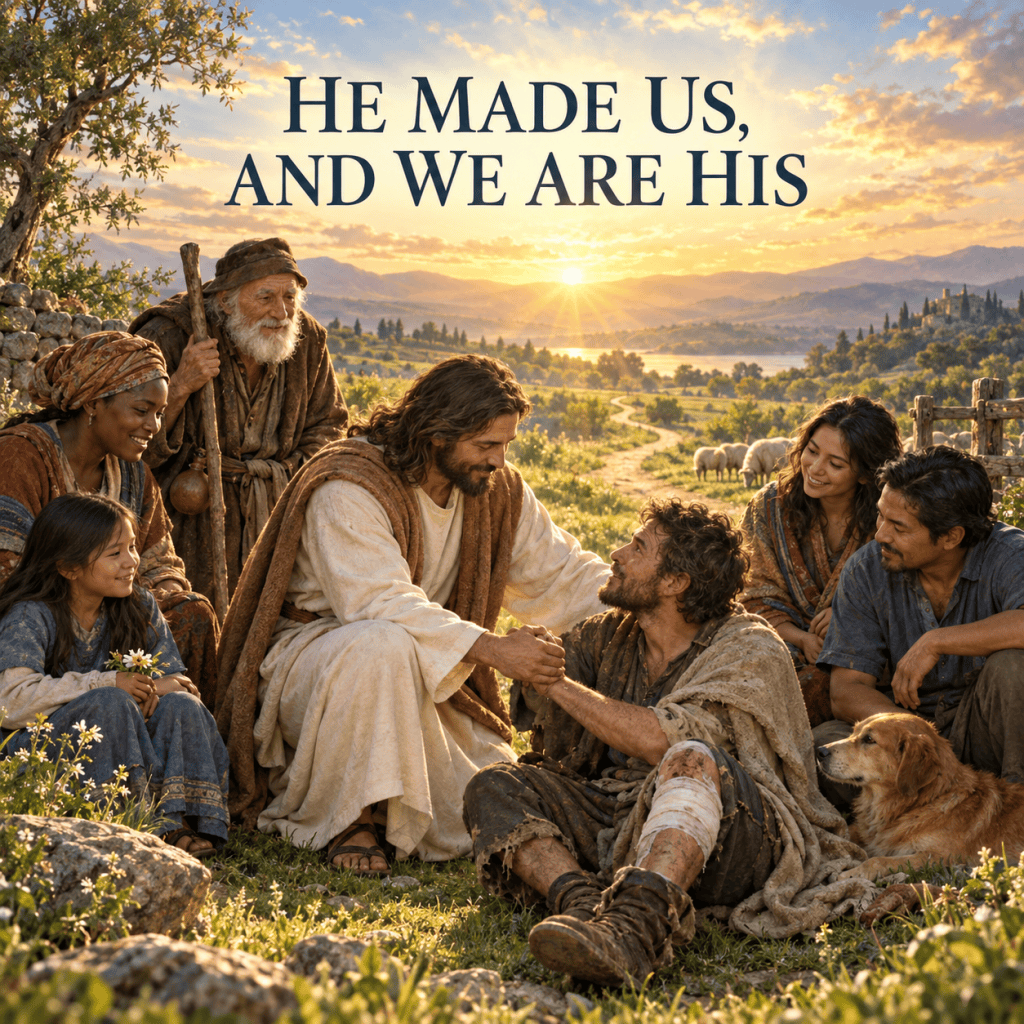
As I read today’s psalms, this phrase captured my attention: He made us, and we are his.
These psalms give us a beautiful description of God. God is loving, just, righteous, fair, forgiving, holy, good, and faithful. God is our Creator, Redeemer, and Sustainer.
Psalm 94 says that God teaches and disciplines his people, gives them relief during troubled times, and does not reject them. The Lord is our fortress.
Psalm 95 declares that the Lord is a great God, but it also warns us: “If only you would listen to his voice today! The Lord says, ‘Don’t harden your hearts.’”
Psalm 97 proclaims, “The Lord is king!” Righteousness and justice are the foundation of God’s throne. Light shines upon the godly, and joy comes to those whose hearts are right.
Psalm 99 calls God a mighty King and lover of justice. God establishes fairness, acts with justice, forgives his people, and corrects them when they do wrong.
Finally, Psalm 100 calls us to enter God’s gates with thanksgiving because the Lord is good. God’s unfailing love continues forever, and his faithfulness continues through every generation.
Mercy and justice both flow from the love of God—and God’s love has boundaries.
Mercy says, “You are not beyond forgiveness.”
Justice says, “The harm you caused matters.”
Boundaries say, “Love does not require allowing the harm to continue.”
The qualities proclaimed in these psalms remind me of the fruit of the Spirit in Galatians 5. “Fruit of God” is not the biblical expression, but the fruit of the Spirit comes from the character of God. Love, joy, peace, patience, kindness, goodness, faithfulness, gentleness, and self-control are not qualities we manufacture by our own strength. They grow within us as the Spirit forms the character of God in us.
God formed humanity from the dust and breathed life into us. Sanctifying grace continues that creative work as God breathes life into the dusty and wounded places of our hearts.
Then we come to Hosea.
Hosea 4 is a painful condemnation of what God sees in Israel. The people are no longer faithful or kind, and they possess no true knowledge of God. They break their promises, commit crimes, and fill the land with violence.
This is not only an ancient Israelite problem. It is a common human problem found in every nation, institution, church, and heart.
God warns the people not to point their fingers and pass the blame. Humanity is very good at doing that. But God also holds the priests responsible because they have failed to teach the people to know God:
“My people are being destroyed because they don’t know me.”
That weighs heavily upon me as an ordained person committed to teaching others about God. It has taken me many years to reach this point. I have not always understood or lived everything I taught. God has formed me through ministry, failure, grief, study, repentance, relationships, and grace.
I cannot make anyone listen, believe, or change. I can only teach faithfully, live honestly, name injustice without becoming self-righteous, and point toward the God whose character is love, mercy, justice, goodness, and faithfulness.
Acts 21 shows Paul determined to go to Jerusalem, even after believers warn him about the suffering awaiting him. They hear the warning and conclude, “Do not go.” Paul hears it and understands, “Prepare yourself.”
Their concern comes from love. Paul recognizes this when he asks why they are weeping and breaking his heart. But love can warn us of danger without making our decisions for us. Eventually, the believers release their desire to control the outcome and say, “The Lord’s will be done.”
That requires spiritual maturity. Faithfulness sometimes means warning someone we love, speaking honestly about the danger, and then entrusting that person to God.
Finally, Luke 5 shows us the character and authority of God embodied in Jesus.
Jesus touches and cleanses a man with leprosy—someone considered unclean and untouchable. His mercy crosses the boundary of exclusion. Yet Jesus also sends the man to the priest, respecting the process that will restore him to the worshiping community.
Then friends carry a paralyzed man to Jesus. When they cannot get through the crowd, they open the roof and lower him into the room. Their love refuses to be stopped by an obstacle.
Jesus first tells the man, “Your sins are forgiven.”
We should not assume that the man’s paralysis was caused by his sins; Jesus does not say that. Jesus heals him physically to demonstrate that the Son of Man possesses God’s authority to forgive.
The Pharisees and teachers ask, “Who can forgive sins but God alone?” Their theology is correct, but they fail to recognize that God’s forgiving and healing authority is standing before them in Jesus.
It is possible to know religious laws and still fail to recognize the character and activity of God.
The psalms proclaim who God is. Hosea warns us what happens when God’s people and their teachers cease to reflect God’s character. Acts teaches us to balance courage with loving counsel and discernment. Luke reveals the King touching the excluded, forgiving sinners, healing the wounded, and restoring people to life and community.
God made us, and we are his.
The Creator continues forming us.
The Redeemer continues restoring us.
The Sustainer continues breathing grace into us.
May the character of the God we worship become visible in the way we treat one another and care for all creation.
Let us pray:
Lord Jesus Christ, teach me to see.
Teach me to know you—not merely as information, doctrine, or religious ceremony, but through your living character.
Give me an open heart that offers mercy, open hands that extend grace, and clear boundaries that seek justice and prevent further harm.
Keep me from pointing only at others when your Spirit is also examining me. Teach me to speak truth without condemning, offer mercy without excusing harm, and follow your calling with courage, humility, and discernment.
Creator, continue forming me.
Redeemer, restore what is wounded.
Sustainer, breathe your life into me.
For you made us, and we are yours.
Amen.
 The Curious Pilgrim
Leave a comment