
Sometimes I read something that names an experience I have carried for years.
That happened while reading Jim Forest’s The Road to Emmaus: Pilgrimage as a Way of Life. His discussion of personal epiphanies invited me to remember moments when an ordinary place became a place of encounter—when something opened my eyes and changed how I understood my life with God.
One of those moments happened in a classroom at Memphis Theological Seminary.
Dr. Barry Bryant kept returning to a simple message: love God and love your neighbor. During a discussion of the Great Commandment—to love God with all our heart, soul, mind, and strength—I began to recognize my whole self in those words: emotional, spiritual, rational, and physical.
I understood that I was being invited to love God with everything I am.
As we talked, my mind went back some thirty years to an ethics class at Free Will Baptist Bible College. We had discussed four basic relationships: our relationship with God, with others, with ourselves, and with the universe.
Suddenly, those lessons came together.
Life is about relationships. God is love. My calling is to live in loving relationship with God, my neighbors, myself, and the creation to which I belong.
First John 4 helped give that understanding its grounding. How can I claim to love God, whom I cannot see, while refusing to love the person I can see? And as I reflected on loving my neighbor as myself, I began to understand how much I needed to know myself, too—my fears, wounds, gifts, and limitations.
That awakening continues to guide my pilgrimage. Scripture, tradition, experience, and reason have helped me examine it and grow into it over the years.
Recently, another awakening came while reading The Way of a Pilgrim and The Pilgrim Continues His Way.
I have struggled with consistency in prayer. Then I encountered the Jesus Prayer:
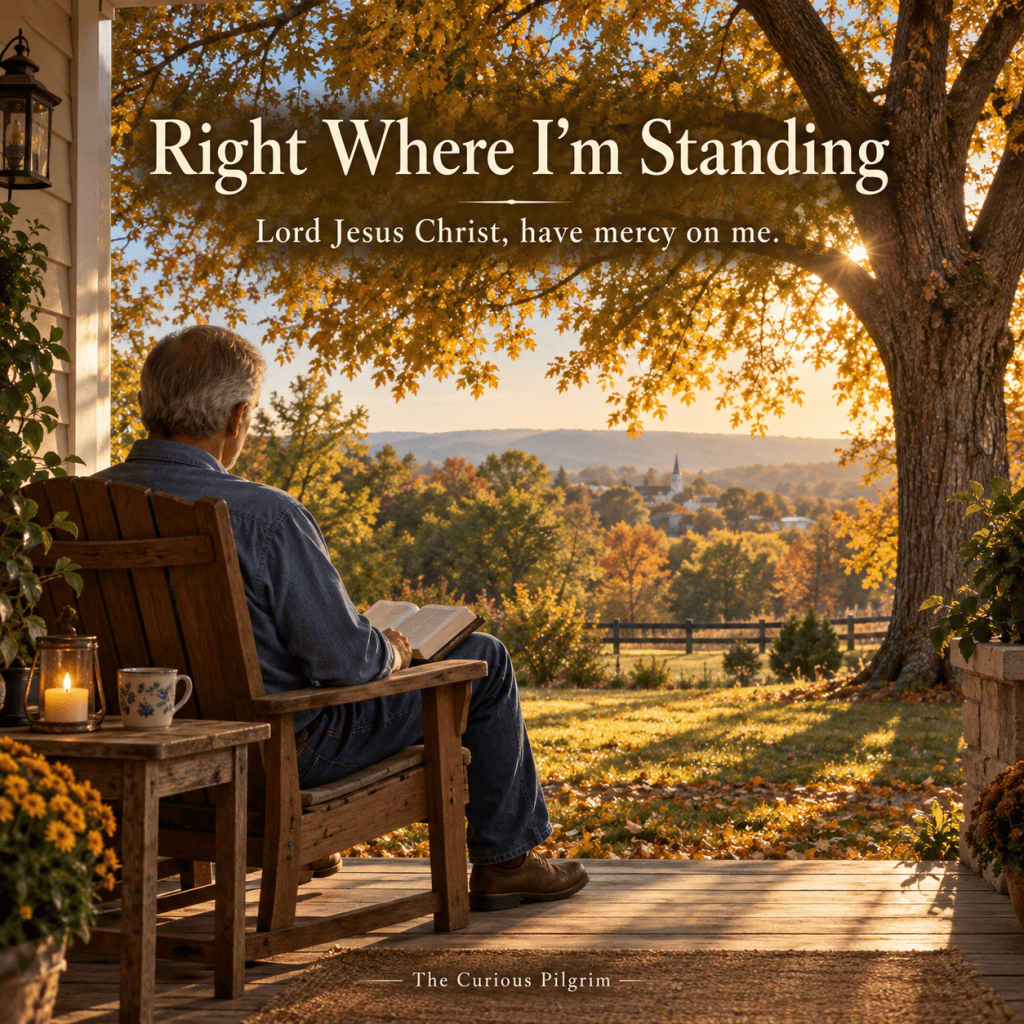
Lord Jesus Christ, have mercy on me.
As I read about the prayer becoming the prayer of the heart, I felt a profound sense of God’s presence. I began repeating those simple words throughout the day. They gave my wandering attention a place to return.
The invitation to pray without ceasing began to feel possible.
Through these books, I also began to understand theosis—sharing in God’s life through grace, growing into union with God. My thoughts went to the language of marriage in Genesis: two becoming one. That image helped me glimpse a communion in which I remain myself while becoming more deeply joined to God in love.
It has changed how I hear the Daily Office readings. I find myself listening for what they reveal about relationship: what draws us toward love, what wounds our communion, and what opens us to healing.
The classroom awakening and this discovery of the prayer of the heart belong together in my life. What I came to understand years ago, I am now learning to carry more steadily through the day.
I still have questions. My attention still wanders. There is much in me that needs patience, mercy, and growth.
But I can return to the prayer.
And I can remember that an encounter with God may happen while I am sitting in a classroom, reading in my chair, walking beneath a tree, or pausing in the middle of an ordinary day.
Right where I’m standing.
Lord Jesus Christ, have mercy on me. Open my eyes to your presence. Teach me to love you with all that I am, and let that love shape how I care for others, myself, and your creation. Amen.


Leave a Reply