
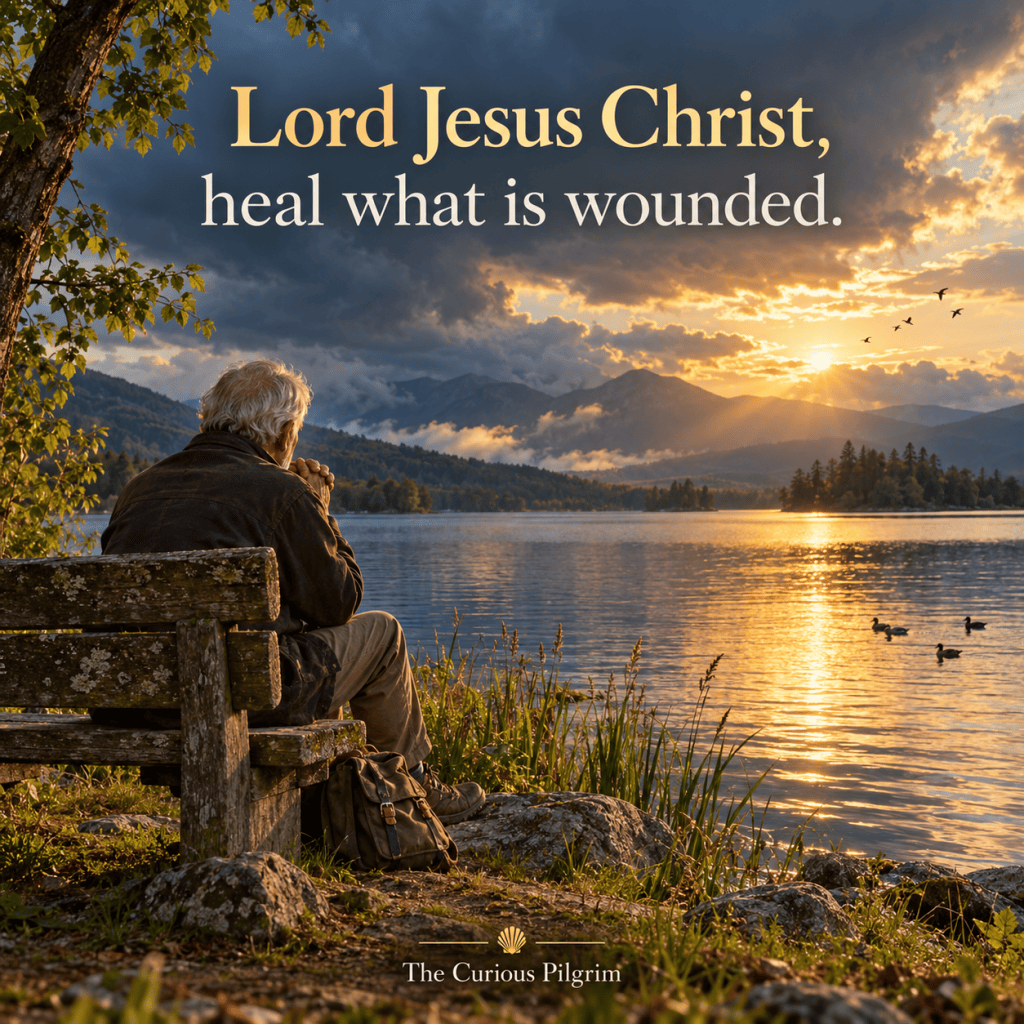
As I read tonight’s Daily Office, one phrase from my prayer kept coming back to me: “Lord Jesus Christ, heal what is wounded.”
We all carry wounds. Some are visible. Others have been tucked away for years, yet they still influence how we hear a word, respond to disagreement, or receive someone’s love. I know there have been times when my reaction to the present carried pain from the past.
Psalm 104 reminds me how much life we receive from God. Water flows through the valleys. Birds find shelter among the branches. The earth provides food. Every breath belongs to this continuing gift of life.
Then Psalm 137 takes us beside the rivers of Babylon, where people sit and weep. Their harps hang silent, and their captors ask them to sing. How do you sing when your heart is broken?
I can understand that question.
The psalm’s final words are terrible—a wish to repay suffering by destroying someone else’s children. I cannot turn that wish into something good. But I can hear the depth of the wound behind it. It makes me ask what happens when our pain becomes a desire to make others hurt.
That is a place where I need to pray: Lord Jesus Christ, heal what is wounded. Help me bring my anger to you before I pass it on to someone else.
Micah takes us to Bethlehem. Amid humiliation and insecurity comes the promise of a ruler who will stand and feed his flock. As a follower of Jesus, I hear the promise of the shepherd whose care I need. I long for the peace that allows wounded lives to grow whole.
In Acts, Paul remains imprisoned while Festus acknowledges that he has done nothing deserving death. His situation is unresolved. His faith in the living Jesus exists alongside injustice and uncertainty.
That matters to me. We may still be waiting for an answer, seeking a fair hearing, or trying to understand what comes next. We can pray and take the next available step toward help.
Then Luke brings us into the boat with the disciples. The storm is real. The boat is filling with water. They wake Jesus because they are afraid they will die.
I have never wanted someone to use “Where is your faith?” to shame a frightened person. Fear needs compassion. In this story, Jesus hears their cry and responds. The disciples are still learning who is there with them.
So am I.
Jesus also asks us to pay attention to how we listen and to put what we hear into practice. That brings this reflection close to home. When someone speaks from a wounded place, can I listen before I judge? Can I offer care without pretending I have all the answers? Can the love I have received become a little light for someone else?
Tonight, I am bringing both my gratitude and my wounds into prayer. Perhaps you have something to bring, too.
Lord Jesus Christ, heal what is wounded. Help me recognize the life you sustain, bring you the pain I carry, listen for your word, and respond with love. When I am afraid, help me trust your presence. Let the care I receive from you become care I offer to others.
What wound needs your attention and compassion today—in yourself, or in someone whose pain you are beginning to understand?
The Curious Pilgrim
Daily Office, October 3, 2026: Psalms 104, 137, and 144; Micah 5:1–4, 10–15; Acts 25:13–27; Luke 8:16–25. Reflection also draws on Micah 5:5. Scripture: New Revised Standard Version Updated Edition.


Leave a comment