
Pilgrim Series: The Sixth Meeting—Unceasing Prayer and Salvation
Source: The Pilgrim Continues His Way, author unknown, translated by Olga Savin, Shambhala, 2001
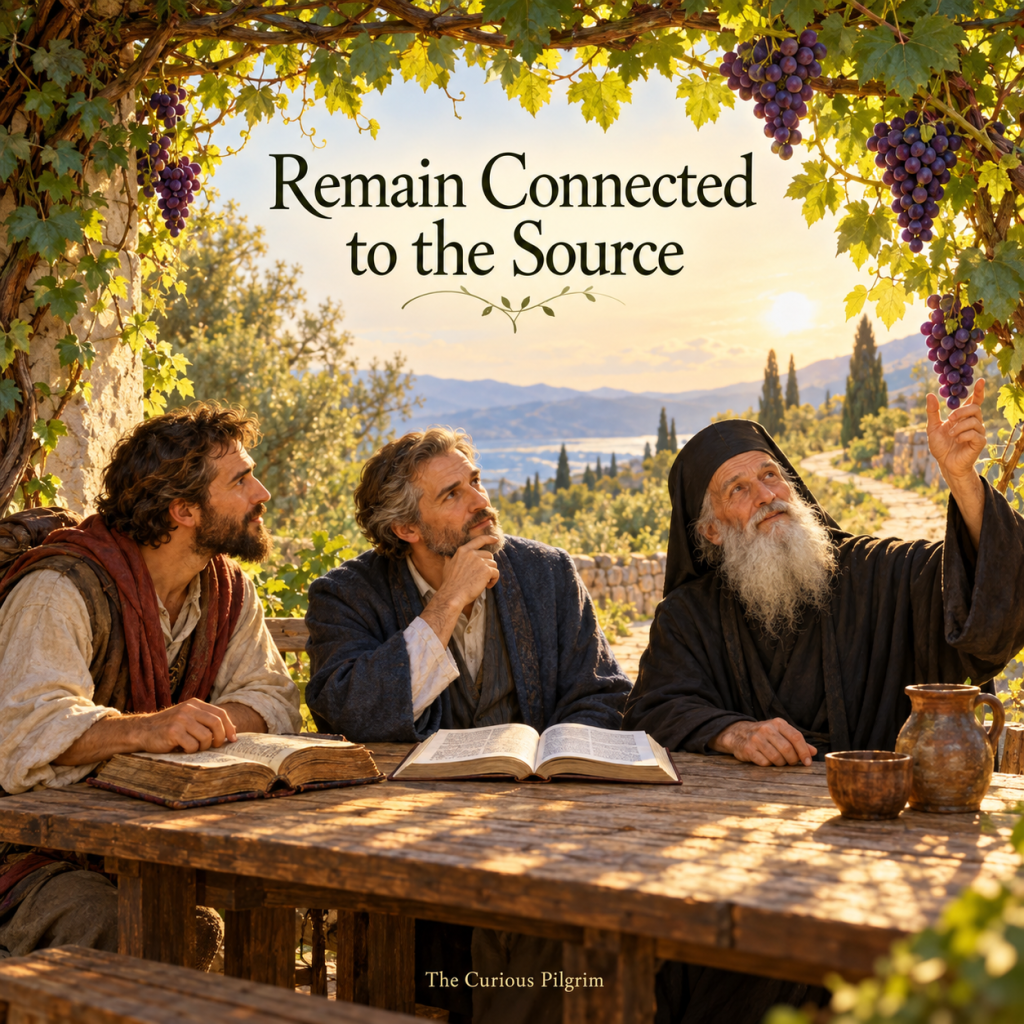
Over the years, I have heard salvation described in two very different ways.
Some speak as though salvation were a single act of God’s grace after which the way we live no longer matters. Since salvation comes through grace, they seem to believe that we can live however we choose and still expect to make it to heaven.
Others concentrate so heavily on examining the fruit in another person’s life that salvation begins to sound like something we earn by doing enough good things. “You will know them by their fruits” becomes a measuring stick used to decide who is saved and who is not.
I have struggled with both ideas.
Slowly, I have come to understand salvation as restored union with God. It begins when I recognize that I need God and ask to be redeemed, restored, and reshaped. Even that turning toward God is made possible by grace.
Grace does not complete its work in a single moment. God’s grace continues working within me throughout my life.
As I place my faith in God and receive the breath of the Holy Spirit, God’s love gradually becomes visible in the way I live. It appears in how I treat other people. How I treat others is connected to how I see myself. How I see myself is shaped by how I understand God. All these relationships influence how I care for God’s creation.
I once tried to separate these things, but I have learned that they belong together. Grace, faith, transformation, fruit, and loving action are not competing parts of salvation. They are movements within the same living relationship.
That is much easier to say than to live, isn’t it?
We spend a lifetime learning how to bear the fruit of love and do the work God has given us. We do not produce that fruit to persuade God to love us. We bear it because God’s love is already breathing life into us.
We are not transformed so that God will accept us. God’s accepting grace makes transformation possible.
The Answer Was Already in Their Hands
In the Sixth Meeting of The Pilgrim Continues His Way, the Professor and the Pilgrim did not fully recognize what they had already experienced.
The Skhimnik reminded them that they possessed the answer they were seeking. The Pilgrim had the Philokalia, and the Professor had the New Testament. The wisdom was already in their hands, but they needed someone to help them recognize it.
God’s grace is often working within our lives when we cannot see it, hear it, taste it, smell it, or even feel it. Sometimes we need another pilgrim to open our eyes to the grace that has been present all along.
The Skhimnik offered them simple but profound advice:
Remain connected to the Source.
This is what unceasing prayer helps us do. Prayer keeps our hearts open to the presence and transforming work of God.
The Work of the Spirit
The Holy Spirit opens our eyes so that we may see, opens our ears so that we may hear, and loosens our lips so that we may speak.
As we remain in communion with God, we begin to understand love, experience peace, and discover joy. We gradually become more patient, kind, gentle, and good. We learn faithfulness and develop self-control.
This does not happen once and then end.
Grace continues its transforming work throughout our lives. We spend a lifetime learning to remain connected to God and allowing the Holy Spirit to produce this fruit within us.
We do not manufacture the fruit of the Spirit through willpower. A branch does not strain until grapes appear. It remains connected to the vine and receives the life it needs to bear fruit.
Jesus said:
“I am the vine; you are the branches.”
When we remain connected to the Vine, the love of God flows through us and shapes our relationships—with God, with other people, with ourselves, and with all creation.
Pray and Remain
Need some joy?
Pray.
Feeling unloved?
Pray.
Losing your patience?
Pray.
Afraid you do not have the strength to take the next step?
Pray.
Prayer does not manipulate God into giving us everything we demand. It reconnects us with the Source of the mercy, grace, love, joy, peace, and strength we need.
Sometimes prayer uses words. Sometimes it means sitting silently in the presence of God. Sometimes it is simply breathing the name of Jesus while we wait for the Spirit to open our eyes, our ears, and our hearts.
Unceasing prayer is not endlessly repeating religious words. It is living in continual communion with God. It is returning again and again to the Source and allowing grace to redeem, restore, and reshape us.
Salvation is not permission to live without transformation.
Salvation is not a reward we earn through good works.
Salvation is a restored relationship with God—a relationship begun by grace, sustained by grace, and made visible as the love of God bears fruit within us.
A Pilgrim’s Prayer
Lord Jesus Christ,
keep me connected to the Source.
Open my eyes that I may see.
Open my ears that I may hear.
Loosen my lips that I may speak
with wisdom, truth, and love.
Breathe your Spirit into me.
Redeem what has been distorted.
Restore what has been broken.
Reshape what still needs to change.
Let your grace produce within me
love, joy, peace, patience,
kindness, goodness, faithfulness,
gentleness, and self-control.
Teach me to receive your love
and allow that love to shape
how I relate to you,
to other people,
to myself,
and to all creation.
When I cannot see your grace,
help me trust that you are still working.
When I feel disconnected,
draw me back to the Vine.
Lord Jesus Christ,
keep me connected to the Source.
Amen.
With this conversation, the Sixth Meeting comes to an end. Where will this understanding of unceasing prayer take the Pilgrim next?
We shall see.
Where are you on your journey?
—The Curious Pilgrim


Leave a comment