
Daily Office Readings for Friday, September 25, 2026
Psalm 102; Psalm 107; Hosea 10:1–15; Acts 21:37–22:16; Luke 6:12–26
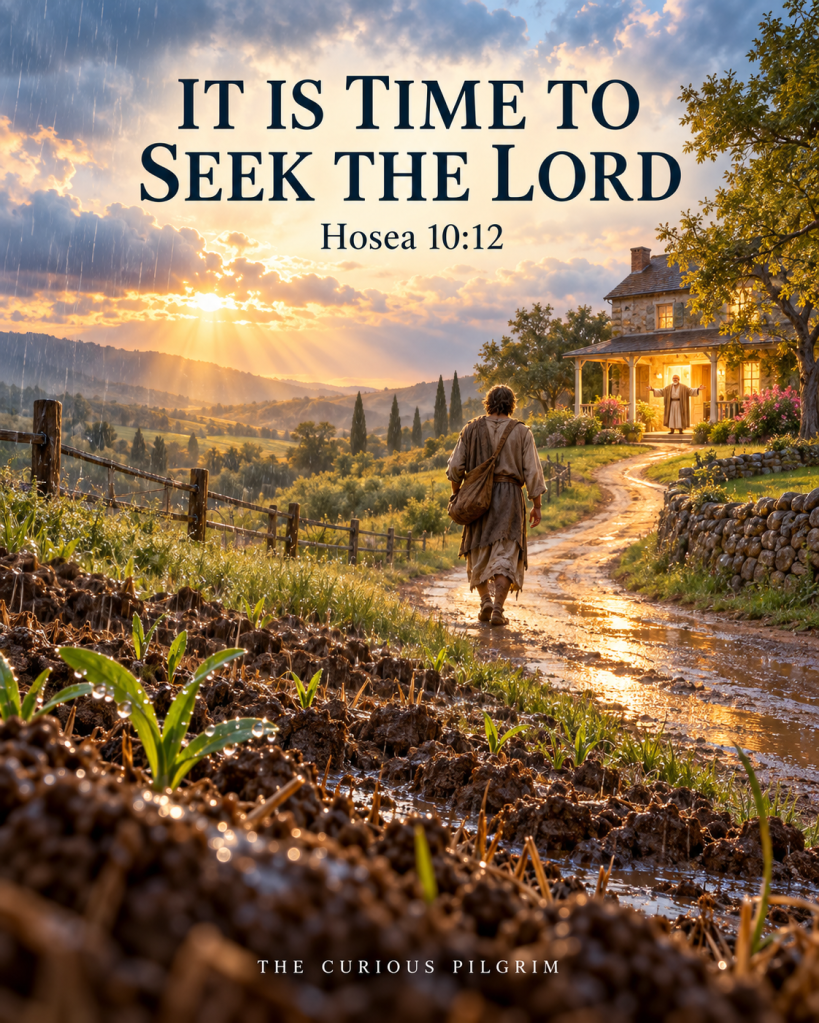
“Sow for yourselves righteousness; reap steadfast love; break up your fallow ground; for it is time to seek the Lord, that he may come and rain righteousness upon you.”
—Hosea 10:12
When I first read today’s passages, I could not see how they fit together. They come from different books, written hundreds of years apart by people from different cultures who spoke different languages.
But as I listened more closely, I began to hear the same human cry running through all of them—and the same faithful God answering, “Come home.”
This is one of the wonders of the Sacred Writings. They are not a single book written at one time by one person. They are a collection of many voices arising from many circumstances. Yet those voices speak about experiences common to all humanity and about the relationships God designed: our relationship with God, with ourselves, with one another, and with creation.
Psalm 102 describes human life as an evening shadow that disappears and grass that withers. We are alive for only a short time, but God is eternal. Hebrews 1 later draws upon this psalm to remind us that creation changes, but God remains the same.
Psalm 107 gives us four pictures of human suffering.
Some wander through the desert, hungry and thirsty, unable to find their way home.
Some sit in darkness and gloom, imprisoned after rebelling against God.
Some become sick because of their destructive choices.
Others sail upon the sea and find themselves terrified by storms beyond their control.
These pictures remind us that suffering has many causes. Sometimes we suffer because of our own choices. Sometimes we suffer because of the choices of others. Sometimes we face storms that no one could have prevented.
Yet every story in Psalm 107 reaches the same turning point:
“Then they cried to the Lord in their trouble.”
God hears the wanderers and leads them home. God breaks the prisoners’ chains. God heals the sick and delivers them from destruction. God calms the storm and guides the sailors safely into harbor.
These are stories of redemption and restoration.
Hosea shows us what can happen when an entire nation forgets God. Israel became prosperous, but its prosperity did not produce justice, gratitude, or faithfulness. Its people trusted their possessions, rulers, armies, and religious rituals instead of trusting God.
Individuals can reject God, but so can nations, communities, and religious institutions. A nation that abandons justice, mercy, and love will eventually experience the consequences of its choices.
Still, Hosea does not leave the people without hope:
“Break up your fallow ground; for it is time to seek the Lord.”
Fallow ground is soil that has become hard and unproductive. It must be broken open before it can receive seed and rain. Our hearts can become hardened in the same way. Prejudice, hatred, fear, selfishness, pride, and indifference can prevent the love of God from growing within us.
Repentance means allowing God to break open that hardened ground. It is not merely feeling guilty. It is changing direction. We sow righteousness so that we may reap steadfast love.
Paul’s story shows us that such a change is possible.
As Paul faced an angry religious crowd, he did not fight back. He told his story. He had once believed that persecuting the followers of Jesus was an act of faithfulness. Then God met him on the Damascus Road, opened his eyes, and changed the direction of his life.
Paul understood what religious people can do when protecting rules, rituals, traditions, and institutions becomes more important than loving God, loving our neighbors, loving ourselves, and caring for creation. His personal testimony became more powerful than retaliation because he could say, in effect, “I once stood where you are standing, but God met me there.”
Luke tells us that before Jesus chose the twelve apostles, he went to the mountain and spent the night in prayer. Even Jesus sought quiet communion with God before making an important decision.
Among those Jesus chose was Judas, who would later betray him. Being part of a religious community does not take away our freedom to choose. We must continue seeking God and allowing divine love to shape our decisions.
Jesus then speaks of blessings and woes. God sees those who are poor, hungry, grieving, and rejected. God has not forgotten them. But Jesus also warns those who are rich, satisfied, laughing comfortably, and praised by everyone. Comfort can make us unaware of our need for God and blind to the suffering of our neighbors.
All these readings finally bring me back to Hosea’s invitation:
“It is time to seek the Lord.”
It is always time to seek the Lord.
When I am wandering, it is time to seek the Lord.
When I am trapped by the consequences of my choices, it is time to seek the Lord.
When I am sick in body, mind, spirit, or relationships, it is time to seek the Lord.
When storms overwhelm me, it is time to seek the Lord.
When my heart has grown hard, it is time to seek the Lord.
When I need to make a decision, it is time to seek the Lord.
God is like the father in the parable of the Prodigal Son, standing at the edge of the porch and looking down the road. God is waiting—not to condemn us, but to welcome us home.
Our journey home can begin with a simple prayer:
Lord Jesus Christ, have mercy on me.
Break up the fallow ground within me.
Teach me to sow righteousness
and reap steadfast love.
Help me change the direction of my life
and restore my relationships
with you, with myself, with others,
and with all creation.
When I wander, lead me home.
When I am imprisoned, set me free.
When I am wounded, heal me.
When storms overwhelm me,
bring me safely into harbor.
Rain your righteousness upon us all.
Amen.


Leave a comment