
Project: Saints
Saint: Francis Clement Kelley, Roman Catholic
November 24, 1870–February 1, 1948
Source: A Year with American Saints, G. Scott Cady and Christopher L. Webber, Church Publishing, 2006.
Looking back over my years in the Church and in the United States, I have seen many changes. Some have been good, and some have been bad. We have more knowledge and modern conveniences, yet many of the problems of the past remain. We still live with hatred and prejudice. We still have poor, neglected, and forgotten communities.
History has not taught us as much as it should because we continue repeating many of its mistakes.
I grew up in Mississippi, one of the poorest states in the nation. My childhood and youth unfolded during years marked by the Vietnam War, the assassination of President John F. Kennedy, church burnings, racial violence, and lynchings.
Yet one of my fondest memories from those years is the front porch of our farmhouse.
That porch was a gathering place. Family members, friends, neighbors, and people passing by would stop and sit for a while. Before the front porch was replaced by the den—and conversation was replaced by television—people met face-to-face and told their stories.
It was not a perfect place. The problems of the world did not disappear when someone stepped onto that porch.
I heard hurt and anger there. I heard prejudice and racial bias expressed by family members, friends, and neighbors. People brought their wounds with them, and sometimes they passed those wounds along through their words and attitudes.
But they came. They sat. They talked. I listened.
On that porch, I began to recognize the real needs people carried. Looking back, I believe that was where the seed of my calling was planted.
Perhaps that is why I later served smaller churches. Those congregations needed help. They needed someone willing to walk beside them, preach for them, visit their homes, comfort their families, and stand with them beside the graves of those they loved.
They also carried traditional beliefs that sometimes needed to be questioned and challenged.
I remember preaching about the reasons Sodom and Gomorrah were destroyed. I pointed to the words of Ezekiel, who spoke of pride, abundance, ease, and a failure to help the poor and needy. Some people told me I was wrong.
I remember disagreements over which version of the Bible should be used and arguments about when Jesus was born. I was even told that I did not need an education to preach.
Yet I continued serving.
I stood beside caskets and walked beside grieving families. In those moments, arguments became less important. What mattered was being present and remembering that God loves everyone—even those who carried hatred toward others because of the color of their skin.
I was not perfect. I did not challenge everything that needed to be challenged. Sometimes I lacked the courage, wisdom, or understanding to say what needed to be said. Looking back, I wish I had done more.
But I felt the pain, and I saw the need.
That is why I identify with Francis Clement Kelley.
Kelley saw rural Catholic communities that were being neglected. Larger and wealthier parts of the Church had resources, while smaller mission communities struggled. He believed those communities mattered to God.
In 1905, while serving as a pastor in Lapeer, Michigan, Kelley founded the Catholic Church Extension Society. The society helped provide churches, clergy, and resources for rural and mission communities. He also founded and edited Extension Magazine, using the written word to tell their stories and make their needs known.
Kelley encountered opposition, but he continued answering the call. Later, as Bishop of Oklahoma, he resisted the influence and agitation of the Ku Klux Klan. He saw prejudice, neglect, and inequality, but he did not surrender to them.
Francis Clement Kelley and I did not have identical ministries. His work reached places and people far beyond anything I accomplished. Yet I recognize something familiar in his story.
God calls people to see those whom others overlook.
God called Kelley to serve rural communities that needed the attention and resources of the larger Church. God called me to serve smaller churches filled with people who needed someone to preach, teach, listen, challenge, comfort, and remain beside them.
Neither of us served perfect people, and neither of us served perfectly.
The needs Kelley recognized have not disappeared. Rural communities are still neglected. Prejudice and division still wound us. People still carry anger, grief, fear, and inherited biases into our churches, families, and gathering places.
I cannot return to the front porch of my childhood and correct every hurtful word spoken there. I cannot return to every church I served and preach the sermons I now wish I had preached.
But I can listen today.
I can walk beside others today.
I can continue telling the truth about God’s love today.
The Jesus Prayer rising within me is:
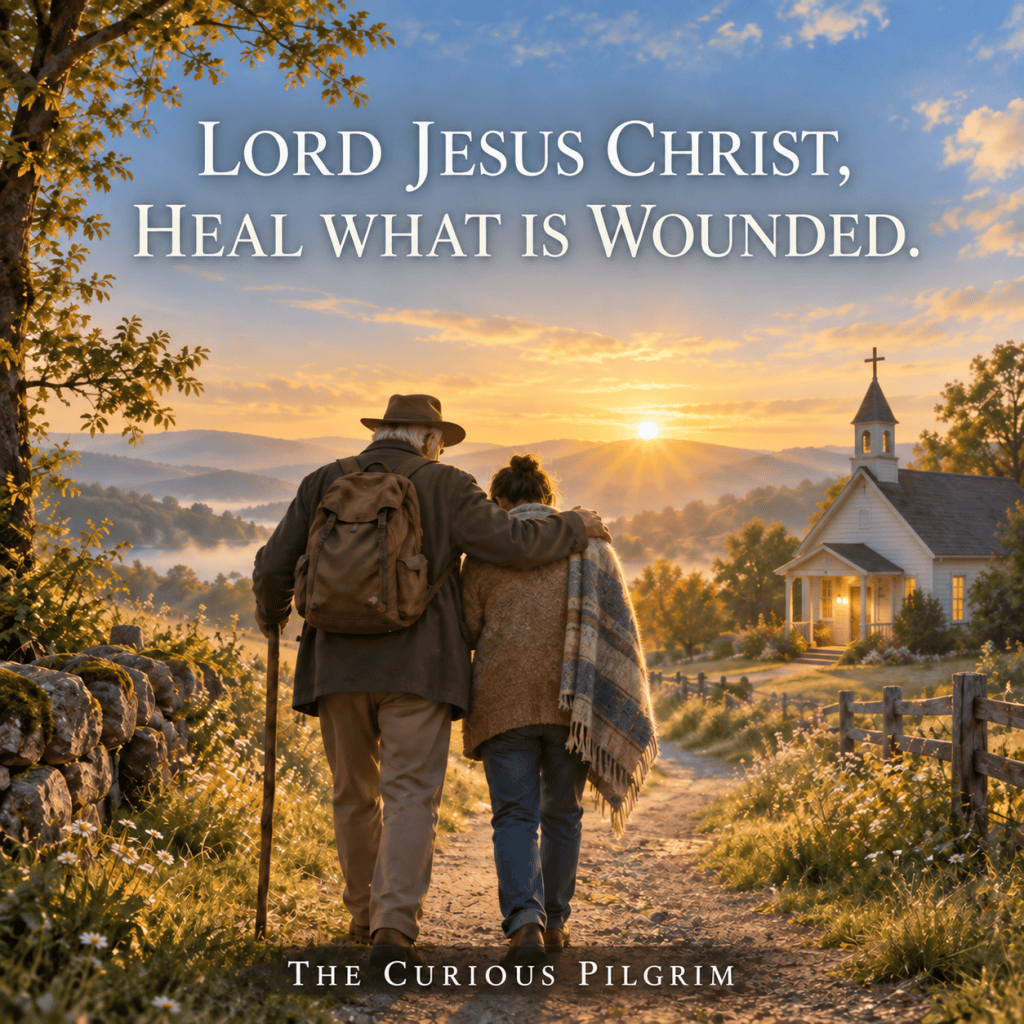
Lord Jesus Christ, heal what is wounded.
Heal what is wounded within me.
Heal what is wounded within the Church.
Heal the wounds created by prejudice, poverty, neglect, fear, and hatred.
Teach us to see the people and communities others overlook. Give us the humility to listen to their stories and the courage to answer when you call.
Lord, make me a faithful servant. Teach me to walk beside others with humility, listen with compassion, serve with joy, and reveal your mysterious grace in every story I tell.
That is the calling whose seed was planted on the front porch.
It is the calling I recognize in Francis Clement Kelley.
And it is the calling I am still learning to answer today.
Lord Jesus Christ, heal what is wounded. Amen.


Leave a comment